Cheapest here2,954 reviews
2.5 hVenice: Street Food Tour with a Local Guide and Tastings
★ 4.8 · 2,954 reviews
- 2.5 hours
- Local Guide and Tastings
- Cheapest here
- Free cancellation
$50$20.00 / hour
Check availability→ What to eat
Venetian food is a lagoon cuisine, not an Italian one: fish, rice, polenta, onions, and a few centuries of trade in spices and dried fruit that turn up in places you do not expect. This page is what to order, what to be sceptical about, and where the good version of each thing actually is.
Quick answer
The list: baccalà mantecato, sarde in saor, fritto misto, risotto, seppie in nero, tramezzini and cicchetti at a bàcaro counter. Almost none of it is expensive and almost none of it is on the main tourist routes. Guided food tours from $50 walk you through most of that list in an evening, which is the fastest way to learn what to order for the rest of your stay.
The nine things to order
Salt cod, sardines, fried fish, black cuttlefish. Lagoon food, not Italian restaurant food.
Baccalà mantecato. Salt cod soaked, poached and whipped with oil until it is pale and almost mousse-like, served on a slice of grilled white polenta. It is the single most Venetian thing you can put in your mouth, and it is on every bàcaro counter in the city.
Sarde in saor. Fried sardines layered with slow-cooked onions, vinegar, pine nuts and raisins, left for a day or two. The technique is medieval and practical — the vinegar kept fish edible on long voyages — and the pine nuts and raisins are the trade routes showing up on a plate.
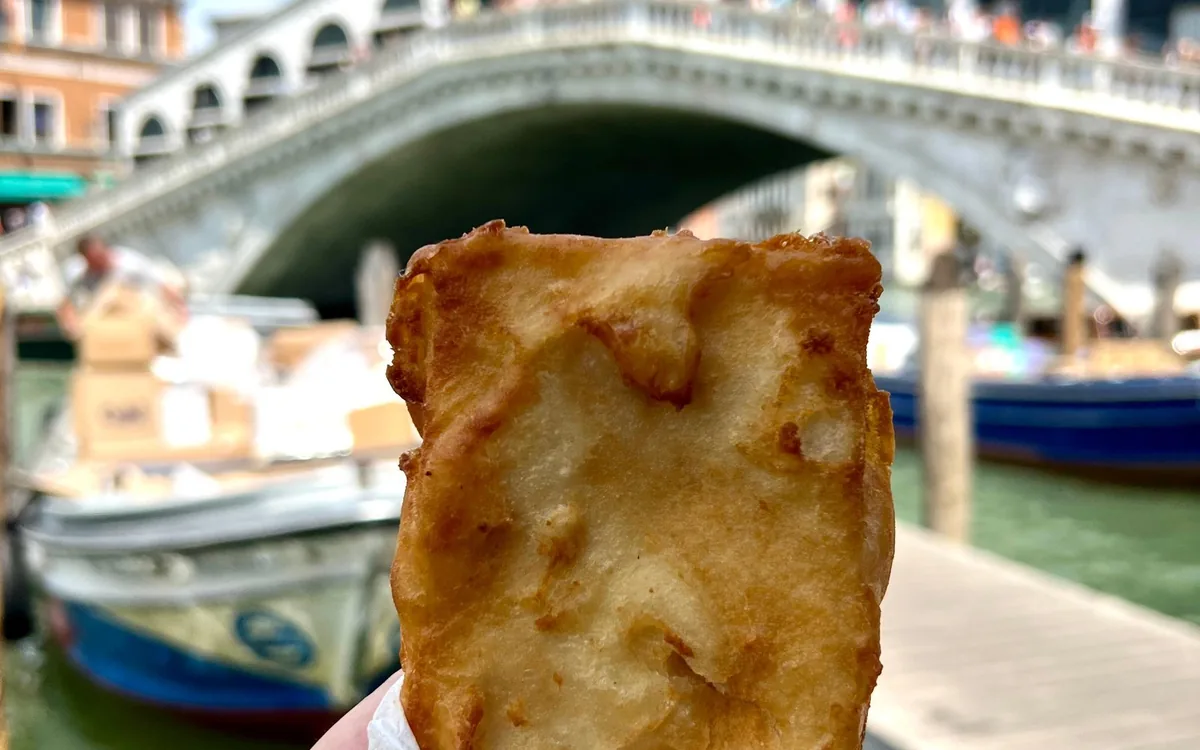
Fritto misto. Small fish, squid and prawns floured and fried, salted, handed over in a paper cone. Eat it walking, immediately, standing near the water.
Risi e bisi. Rice and peas, somewhere between a risotto and a thick soup. It was served to the doge on the feast of St Mark on 25 April, which tells you how seriously this city took a bowl of peas.
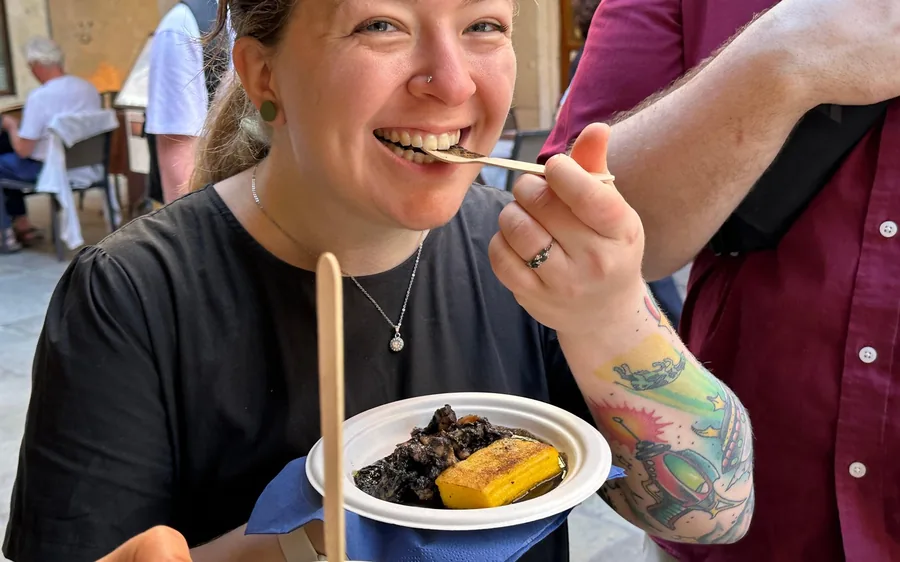
Seppie in nero. Cuttlefish stewed in its own ink, black, glossy and served with white polenta for contrast. The most alarming-looking thing on the menu and one of the best.
Bigoli in salsa. Thick wholemeal pasta with a sauce of onions and anchovies cooked down to almost nothing. Four ingredients, and a lesson in what this kitchen is actually about.
Moeche. Soft-shell crabs from the lagoon, eaten whole, available only for a few weeks in spring and autumn when the crabs moult. If they are on and you are here, order them.
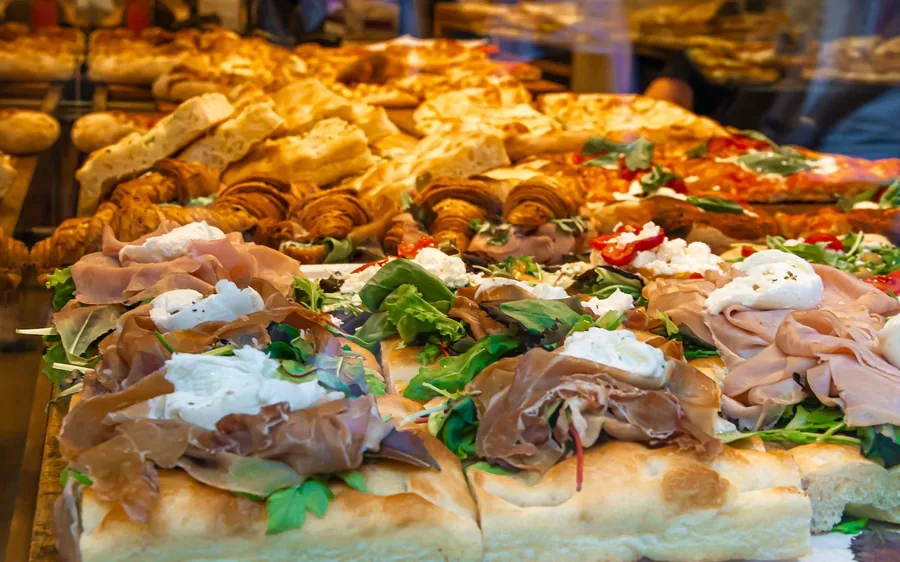
Tramezzini. Soft crustless triangles piled with tuna, egg or artichoke. Not romantic. Entirely Venetian, and what half the city eats at eleven in the morning.
Something sweet. Bussolài, the ring-shaped biscuits from Burano, or fritole in carnival season. Tiramisu is a Veneto dish, though Treviso rather than Venice claims it.
What to be sceptical about
Not scams exactly — just not the good version.
The most reliable single signal in this city. A place that photographs its dishes is selling to people walking past once.
The rent on that ground is the highest in Italy, and something in the equation has to give. Ten minutes of walking is the whole solution.
It is not a Venetian dish in origin and the version served on the main routes is usually made from frozen clams. Order the cuttlefish instead.
Sometimes genuine, often a commission. The same is true of anyone who approaches you in the street with an offer.
A cover charge per person is normal and legal in Italy and should be printed on the menu. It is not a trick; it is simply how restaurants here price. Check it before you sit, and then stop worrying about it.
The fastest way to learn all of this is one evening with somebody who already knows it. Food tours from $50, rated 4.8 across 2,954 reviews.
Every food tour compared→Book direct
The cheapest street food walk, the Rialto market lunch, the tasting tour and the secret food tour.
★ 4.8 · 2,954 reviews
★ 5.0 · 390 reviews
★ 4.9 · 559 reviews
★ 5.0 · 9 reviews
Where to eat it
The market supplies it, Cannaregio serves it, and ten minutes of walking solves most problems.
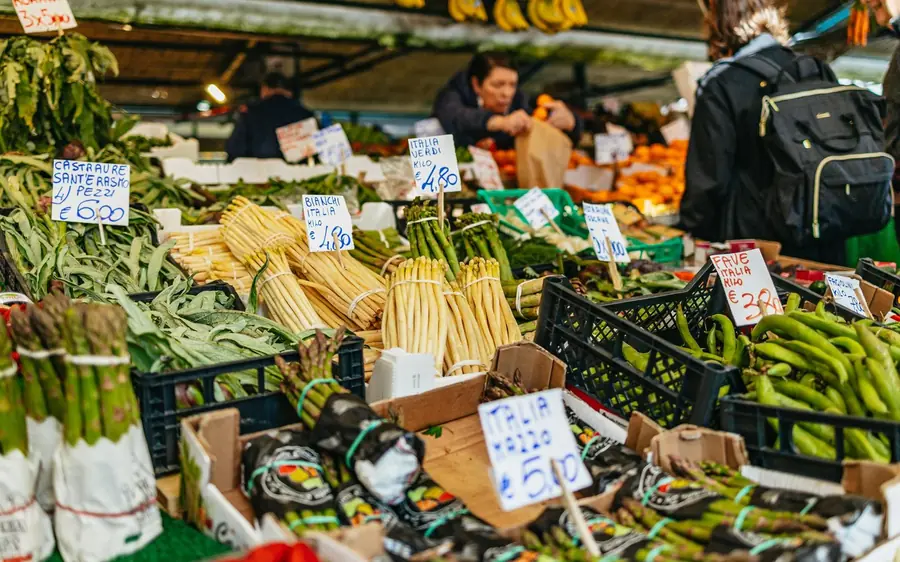
The Rialto market is where the city’s food actually comes from, and it is worth going even if you are not buying. The produce side runs most mornings; the fish hall — the Pescaria, under its arcade beside the canal — is closed on Sunday and Monday. The bars immediately around it open early and serve what the market had.
Cannaregio, north of the Grand Canal, has the densest run of good bàcari in Venice and is where most food tours spend the evening.
San Polo and Santa Croce, around and behind the market, hold the oldest bars in the city, some of which have been pouring wine on the same corner for several centuries.
Dorsoduro and Castello are quieter and more residential, with fewer places but a higher proportion of them aimed at people who live there.
And the general rule that works everywhere: walk ten minutes away from whatever famous thing you just looked at, and then choose.
Common questions
Baccalà mantecato — whipped salt cod on grilled polenta — and sarde in saor, sardines in a sweet-sour onion marinade. Both are on every bàcaro counter and both are unmistakably of this city.
Single-mouthful plates eaten standing at the counter of a Venetian wine bar, a couple of euros each. It is the best and cheapest way to eat in Venice.
The food aimed at people passing through once is often poor, and there is a lot of it on the main routes. The food a few streets away is very good and cheap. The difference is a ten-minute walk and knowing what to order.
That is a matter of taste, but Venice has an unusually strong case: the cuisine is distinct from the rest of Italy, the bàcaro format is unlike anything else, and the gap between the good and the bad places is wider here than almost anywhere, which is exactly what a guide fixes.
An ombra — a small glass of local wine — or a spritz, made here with Select or Aperol. Both cost three or four euros standing at the counter.
From the Veneto, but Treviso rather than Venice claims its invention. It is good here; it is simply not a Venetian dish in origin.
Most mornings, with the fish hall closed on Sunday and Monday. That closure changes what a market food tour can show you, so check the day.
Go deeper
Nineteen tours compared, and what a food tour in Venice actually walks you into.
VerdictNineteen ranked for one decision, with a straight answer for each kind of visitor.
Doge’s PalaceWhat the ticket covers, the route through it, and the bridge everyone photographs.
The BasilicaThe gold, the horses, the Pala d’Oro — and which of them your ticket opens.
CicchettiWhat cicchetti are, how a bàcaro works, and how to order without hesitating.
Street foodThe cheapest way to eat well in Venice, and what the guide is actually for.
Venice: St. Mark's Basilica & Doge's Palace Tour with Ticket
★ 4.7 · 3,913 reviews · Free cancellation 24 h